
The Purpose and Scope of the PELTIC Survey
For anyone working in the Cornish sardine industry, the annual Cefas PELTIC survey is a key date in the diary. Since 2012, the Centre for Environment, Fisheries and Aquaculture Science (Cefas) has conducted the Pelagic Ecosystem Survey in the Western Channel and Celtic Sea—known as PELTIC for short. This ongoing scientific programme provides the vital, on-the-ground data required to maintain sustainable catch limits and safeguard the wider marine ecosystem.
The primary aim of the PELTIC programme is to monitor the populations of small pelagic fish, such as sardines, sprat, anchovy, and mackerel. Because these species have naturally dynamic populations that bounce around based on environmental conditions, relying purely on commercial catch data is simply not enough.
The survey functions as a regular, independent health check for the fishery. By gathering comprehensive data on fish abundance, researchers can accurately estimate the total biomass of the stock. For the Cornish Sardine Management Association (CSMA), this information forms the absolute foundation for setting robust Harvest Control Rules and precautionary catch limits, ensuring the fishery confidently maintains its Marine Stewardship Council (MSC) certification. Furthermore, the survey investigates the broader ecosystem by measuring water temperature and plankton levels, whilst tracking the presence of top predators, from seabirds to bluefin tuna.
The Scope of the Operation
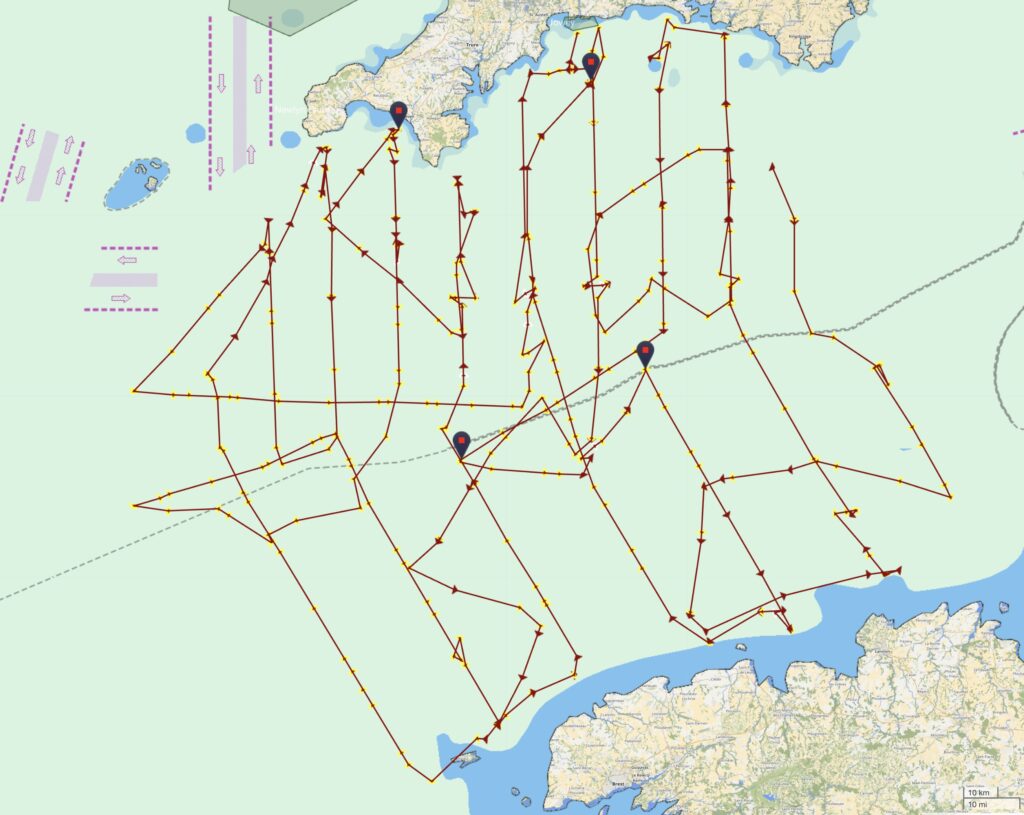
Every October, a dedicated team of scientists with Jeroem van der Koij in charge embarks on the research vessel Cefas Endeavour. The survey spans a vast area, covering the western English Channel, the Bristol Channel, and the eastern Celtic Sea. In 2017, the survey boundaries were expanded to ensure they fully captured the north-western limits of the sardine population.
To map the marine environment, researchers utilise state-of-the-art acoustic echosounders to locate and quantify fish shoals. This acoustic data is then validated using mid-water trawls, allowing the scientists to sample the catch and determine the specific species composition, fish size, weight, and age.
Insights from the Annual CSMA Reports
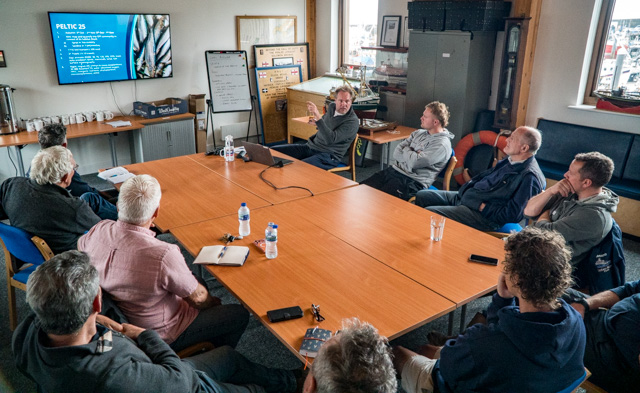
The tangible benefits of this research (2025 Peltic Survey) were clearly highlighted during the recent annual presentation to the CSMA by Jeroen van der Kooij, the principal investigator for the PELTIC survey. Delivering the latest findings on behalf of Cefas, Jeroen offered a thorough and highly encouraging update on the current sardine stock.
The report confirmed that the sardine population remains exceptionally robust, with the latest assessments estimating a total stock biomass of 502,000 tonnes—the largest on record. Although the industry had noted a recent trend of smaller fish sizes and shifting autumnal distributions, the presentation clarified that these changes are not the result of overfishing. Instead, they point to broader environmental and climatic shifts, with sardine populations expanding and spawning further north past Cornwall.
Additionally, the presentation strongly commended the self-sampling efforts of commercial fishers. This active collaboration helps plug essential data gaps regarding fish size and weight. Ultimately, the ongoing teamwork between the fishing fleet and Cefas provides a much clearer understanding of the marine environment, helping to secure a sustainable and profitable future for the fishery.
Crucial CSMA self-sampling programme
The commercial fishers’ self-sampling programme is a practical initiative where the Cornish sardine fleet and onshore processors actively collect biological data from their catches to assist scientific research.
How the Programme Works
Boats leave a sample of their catch taken during the landing process in ice on the fish market
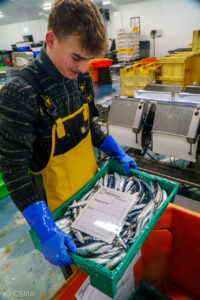
The initiative relies on regular data collection at two key stages:
- At sea: Skippers in the Cornish Sardine Management Association (CSMA) submit detailed weekly catch logs and take regular length measurements of the fish directly on the deck.
- Onshore: Before the catch is processed, factory teams conduct batch sampling to measure both the length and weight of the landed sardines.
All of this raw biological data is compiled throughout the fishing season and handed over to the Centre for Environment, Fisheries and Aquaculture Science (Cefas) for detailed analysis.
Why the Data is Important
While the annual Cefas PELTIC survey provides a highly accurate, fishery-independent snapshot of the total stock biomass each autumn, researchers also need to understand exactly what the commercial fleet is removing from the water on a week-by-week basis.
The self-sampling programme fills this crucial gap. It provides Cefas with a continuous stream of real-world, fishery-dependent information regarding fish sizes and length-weight relationships over the entire catching season. This detailed picture helps scientists update their complex stock assessment models and better understand population dynamics.
For the CSMA, having access to this accurate, up-to-date science is essential. It allows the association to establish strict, science-backed Harvest Control Rules, ensuring that the seasonal catch limits remain sustainable and that the fishery comfortably maintains its Marine Stewardship Council (MSC) certification.
MARINElife Charity adds another dimension to the survey
Peter Howlett, serving as the observer on board the Endeavour, notes that the MARINElife charity adds an entirely new dimension to the survey work this year. A quick look at their Facebook page shows exactly what this extra layer of observation entails. The charity is dedicated to recording and protecting marine wildlife, and the page is filled with regular updates from observers stationed on various vessels, sharing recent sightings of whales, dolphins, and seabirds around the coast.
Here’s an interesting observation made by Peter on October 14th, “We don’t normally have a chance to trawl close inshore in Mount’s Bay, there are usually too many fishing pots laid, today there were none and Jeroen was glad of the chance to trawl. The catch was almost totally Sprat, one of his target species and not usually found this far west.” and later, “More marks on the sounder meant a break for another trawl, Jeroen was confident these would be Sardine, but he never found out. For whatever reason the trawl was unsuccessful and there was little in the net. We were 25km from the nearest land.”

Bringing this focus to the Endeavour means the current survey goes beyond standard fish stock assessments to capture a much broader view of the marine environment. The Facebook page provides a straightforward, behind-the-scenes look at their ongoing conservation efforts. It is a brilliant resource for anyone wanting to see how tracking marine mammals and seabirds feeds into the wider scientific picture of what is happening out at sea.
Further information about the Peltic urvey and other work carried out by Cefas is available here along with work by MARINElifeUK here.

